Long-Term Care Insurance Provider
Financial support to reduce the cost of caring for yourself when you no longer can.

What people are saying
I have known Bob and his crew for many years. He is a true professional, but is also a down-to-earth kind of guy.
He and his team make you feel comfortable when in meetings, or when on a phone conversation.
I have full trust in his advice and financial planning for me.
Thank you Langan Financial Group.
A note about this testimonial: The individuals providing the testimonials above are current clients of Langan Financial and were not compensated for providing their testimonials. The testimonials reflect their individual experiences and are not representative of the experience of all clients.
What is Long-Term Care Insurance?
Long Term Care Insurance is an insurance policy that provides financial assistance to the policyholder for daily care. Policies vary according to:
- What they will cover
- The requirements to trigger a policy
- How much financial assistance a day they will cover
These services can include:
1. In-Home Care
- These services include homemaker services and home health aide.
2. Community and Assisted Living
- These services include adult day health care as well as Assisted living facility homes.
3. Nursing Home Facility
- These services include a semi-private room and a private room.
Is Long-Term Care
Insurance Worth It?
Long-term care insurance may be worth considering, especially if the premiums fit comfortably within your budget. Most health insurance does not cover custodial long-term care, and Medicare generally does not cover ongoing assistance with everyday activities, increasing the importance of having a plan for potential care expenses.
According to a 2022 analysis from the U.S. Department of Health and Human Services, approximately 56% of Americans turning 65 are expected to require long-term services and supports.
Women who need care are projected to require it for an average of 3.6 years, compared with 2.5 years for men.
There is a good chance that you or someone you know will need long-term care. Depending on your health, finances, and desired level of coverage, an insurance policy may help manage some of these potential expenses. Because eligibility and pricing can depend on your age and health, it may be helpful to explore your options before care is needed.
While coverage can be expensive, qualified long-term care insurance may offer potential tax advantages under certain circumstances.
If you itemize deductions, a portion of the premiums paid for a tax-qualified policy may be included as a medical expense for federal income tax purposes. However, only total eligible medical expenses exceeding 7.5% of adjusted gross income are generally deductible.
For 2026, the federal limits on eligible long-term care insurance premiums are:
-
Age 40 or younger: $500
-
Ages 41–50: $930
-
Ages 51–60: $1,860
-
Ages 61–70: $4,960
-
Age 71 or older: $6,200
These limits apply per person and are based on age at the end of the tax year. State tax treatment may vary.
Information current as of September 17, 2026. Sources: U.S. Department of Health and Human Services, Medicare.gov, IRS Publication 502, and IRS Revenue Procedure 2025-32. Tax laws and insurance provisions may change. Consult a qualified tax or insurance professional regarding your individual circumstances.
Is Long Term Care Tax Deductible?
Long Term Care Insurance has both tax-qualified polices and non-tax qualified policies.
The federal government allows individuals to claim a portion of the premiums as a medical deduction for tax qualified policies.
To do this, individuals must itemize their:
- Taxes
- Medical
- Dental expenses
In addition, these expenses must exceed 7.5 percent of your adjusted gross income.
However, benefits received from a tax-qualified long term care policy are treated as not taxable.
What is a Tax Qualified LTC Policy?
Tax qualified long term care policies must adhere to specific requirements. It must offer an individual:
- Inflation protection
- Nonforfeiture protection
These clauses do not have to be purchased by an individual.
However, it offers protection against inflation and loss of full benefits if you stop paying premiums after a certain number of years.
When Should I Consider Long-Term Care Insurance?
Long-term care insurance is one of those items that are better to purchase earlier than later. The difficult part is knowing if you will need it or not.
Because it is unknown if you will use it, it is easy to push off, especially if you are in good health.
The difficult thing with insurance is, that when you are healthy, you will be able to get it, but you will not need it. It is when you are unhealthy you will need it, but may not qualify or it will be extremely expensive.
The earlier you can purchase long-term care insurance, the cheaper it is likely to be because you are likely to be healthier.
Even if you cannot get the perfect coverage, some coverage is better than nothing and it may be more affordable than you think.
Long-Term Care Insurance Cost
You will not be surprised to hear the Long-Term Care Insurance cost varies depending on numerous factors including:
- Age
- Health
- Gender
- Type of plan
Because of the varying criteria used to assess long-term care costs, the price can vary widely.
Long-Term Care Insurance Cost Example
The American Association for Long-Term Care Insurance published its 2026 Price Index after comparing policy costs from leading long-term care insurance companies. The results illustrate how premiums can vary based on factors such as age, health, sex, location, insurer, and the benefits selected.
For a single 55-year-old man in “select health,” annual long-term care insurance premiums ranged from $950 for level benefits to $3,710 for benefits that grow by 5% annually.
That equals approximately $79.17 to $309.17 per month for an initial benefit pool of $165,000. Applicants in excellent health may qualify for lower premiums, although eligibility and pricing are determined by the insurance company.
For a single 55-year-old woman with the same initial benefit pool, annual premiums ranged from $1,500 to $6,400—or approximately $125 to $533.33 per month—depending on the benefit-growth option selected.
The Association’s survey includes several pricing comparisons. The chart included here compares the estimated cost of purchasing coverage at age 55 with the cost of purchasing it at age 60.
Long-term care insurance can be expensive, and premiums vary based on your age, health, location, insurer, and selected benefits. Applying at a younger age may result in a lower initial premium and a greater likelihood of meeting the insurer’s health requirements. However, purchasing coverage earlier also means paying premiums for a longer period, and future premium increases may be possible.
Information current as of September 17, 2026. The quoted premiums are based on the AALTCI’s July 2026 pricing examples for Illinois and are subject to change. Actual availability, benefits, underwriting decisions, and premiums vary by applicant, state, policy, and insurance company.
Long-Term Care Insurance vs. Disability Insurance
Long-term care insurance focuses on providing daily care to an individual at any age. It focuses on providing payment for daily living assistance.
Long-term disability insurance provides income replacement for a portion of your income typically until normal retirement age. It does not provide benefits after your retirement age.
Assessing Your Long-Term Care Insurance Needs
It is always worth a conversation to get an insurance quote because, in the best-case scenario, it is more affordable than you thought.
If it is too expensive or you do not qualify, then the conversation does not cost you anything.
Give us a call to discuss your situation and work together to understand your needs.
We can run free quotes for you to see if it is worth pursuing, it may be more affordable than you think.
Long-Term Care Insurance Agent
Working with a local long-term care insurance agent is an important decision that can impact not only your future but your family.
When deciding what insurance agent to work with, be sure the company is an independent agency that does not require specific quotas or products for their advisors to sell or meet.
You want an advisor that can understand your needs and find a product that meets your requirements rather than a suboptimal product.
When it comes to insurance, there is no one product that fits all. Each person's case should be discussed to understand:
- What are your goals?
- What is your situation?
- What are your obstacles?
- What plan aligns best to overcome your obstacles and achieve your goals?
Get started today
Contact Us Today

Chat with a Long Term Care Insurance Agent
Langan Financial Group's insurance agents have over 50 years of experience servicing insurance policies for individuals and families.
Give us a call at 717-288-1880 to see how our local agents can help with your insurance policy needs. Or visit our long term care insurance agent contact page to fill out an inquiry.

FREE Benchmark Comparison Services
Financial Advisor Locations:
Camp Hill, PA Financial Planning Office
York, Pa Financial Planning Office
Harrisburg, PA Financial Planners
Communities Served:
Langan Financial Group, LLC ("Langan Financial Group" or "LFG") is an SEC registered investment adviser. SEC registration does not constitute an endorsement of the firm by the Commission nor does it indicate that the adviser has attained a particular level of skill or ability. LFG may only transact business in those states in which it is registered, or qualifies for an exemption or exclusion from registration requirements.
You can review our registration and disciplinary history on the SEC's Investment Adviser Public Disclosure (IAPD) website and, for brokerage registrations, on FINRA's BrokerCheck. This website is for general information only. It is not legal, accounting, or tax advice. Please talk with your own legal or tax professional about your situation. Important information about our firm is on our Disclosures page.
© Langan Financial Group
Harrisburg, PA Office
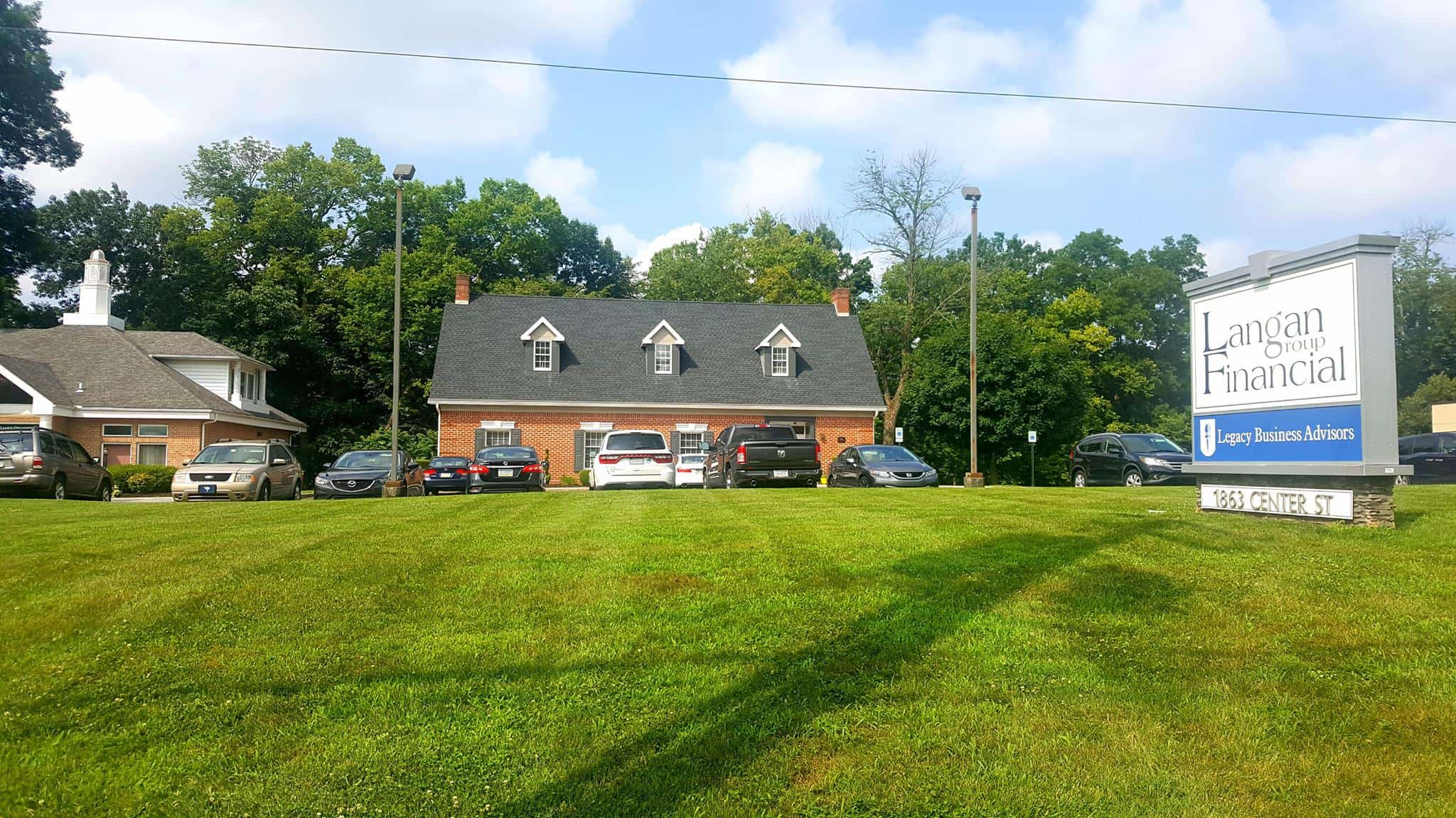
Address: 1863 Center St, Camp Hill, Pa 17011
Phone: 717-288-1880
York, PA Office
Address: 3405 Board Rd, Suite 200, York, Pa 17406
Phone: 717-773-4085