
Most discussions about Roth conversions focus on a narrow window: those golden early retirement years when income drops temporarily. While this represents an important opportunity, it tells only part of the story.
Roth conversions aren’t just reactive strategies for addressing immediate low-income periods—they’re proactive tools for comprehensive, long-term tax planning that can benefit investors across various life stages and income levels.
The real power of Roth conversions lies not in timing market downturns or exploiting temporary income dips, but in systematically building tax diversification and creating strategic flexibility for future decades.
Whether you’re in your peak earning years, navigating career transitions, or planning for retirement that’s still years away, understanding when and how to deploy conversion strategies can fundamentally reshape your long-term tax landscape.
The Strategic Foundation: Why Roth Conversions Matter
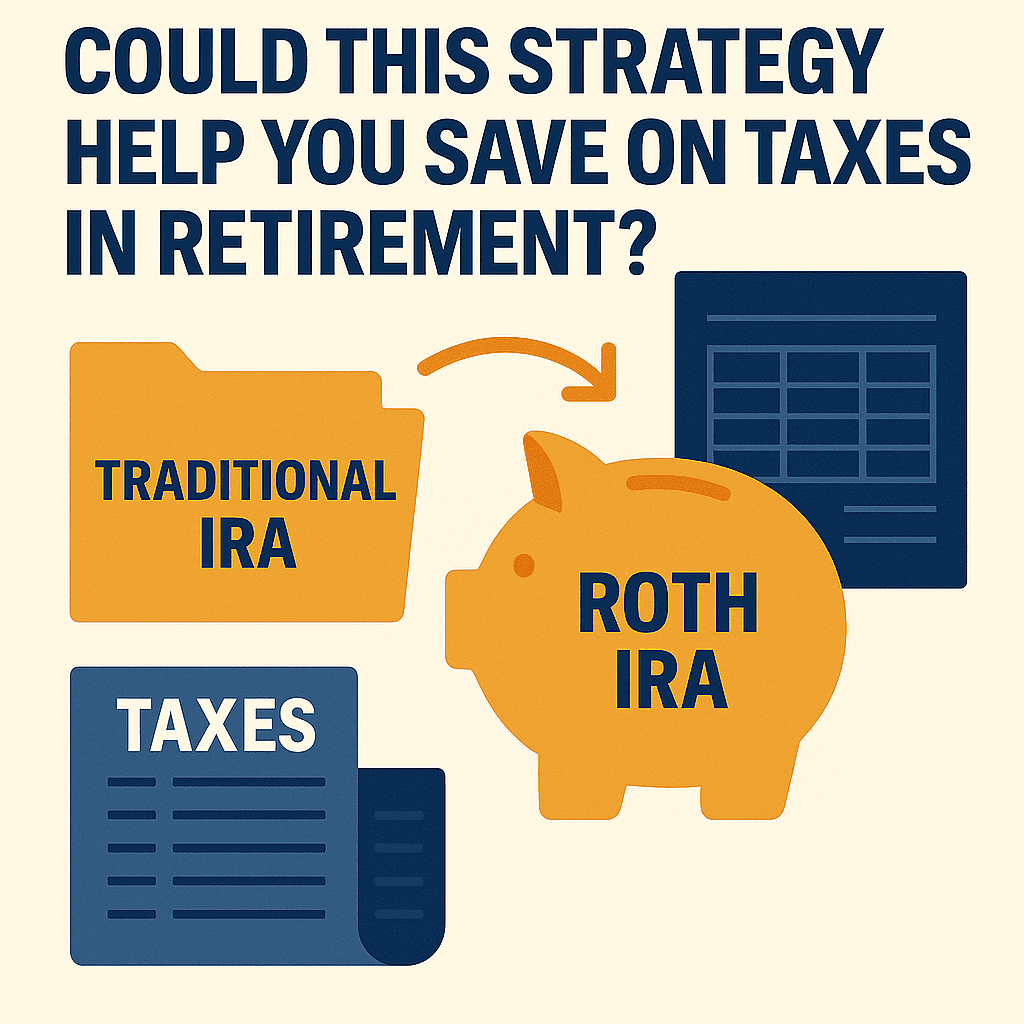
A Roth conversion represents more than a simple account transfer—it’s a deliberate decision to pay known taxes today in exchange for eliminating unknown future tax obligations. This trade-off becomes particularly powerful when viewed through the lens of comprehensive financial planning rather than short-term tax minimization.
The Conversion Mechanics: When you convert funds from a Traditional IRA, 401(k), or other pre-tax retirement account to a Roth IRA, you trigger immediate ordinary income taxation on the converted amount. However, this creates several long-term advantages:
- Tax-free future growth: All subsequent investment gains grow without tax implications
- Tax-free withdrawals: Qualified distributions after age 59½ generate no taxable income
- RMD elimination: Roth IRAs never require minimum distributions during the owner’s lifetime
- Estate planning benefits: Beneficiaries inherit tax-free assets with more favorable distribution options
Beyond the Retirement Window: Strategic Conversion Scenarios
1. Tax Rate Arbitrage Planning
The most compelling reason for Roth conversions often has nothing to do with current low income. If you expect to face higher tax rates in the future—whether due to career progression, changing tax laws, or retirement income patterns—paying current rates can generate significant long-term savings.
Peak Earning Years Strategy: Even high earners can benefit from strategic conversions when:
- Current marginal rates remain below projected retirement rates
- Large traditional IRA balances will generate substantial future RMDs
- Estate planning goals prioritize tax-free wealth transfer
Tax Policy Hedging: With historical tax rates near multi-decade lows and growing federal deficits, many planners view current rates as potentially temporary. Converting during periods of relatively low taxation can provide insurance against future rate increases.
2. Tax Diversification Architecture
Rather than concentrating retirement assets in single tax treatment categories, sophisticated investors build diversified tax structures that provide flexibility for managing future income.
Three-Bucket Approach:
- Taxable accounts: Immediate liquidity with capital gains treatment
- Tax-deferred accounts: Traditional IRAs/401(k)s for current tax benefits
- Tax-free accounts: Roth IRAs for tax-free future income
This diversification enables strategic withdrawal sequencing in retirement, allowing retirees to manage their tax brackets by drawing from different account types based on annual tax optimization opportunities.
3. Legacy Planning Optimization
For wealth transfer purposes, Roth conversions can significantly enhance the value passed to beneficiaries, even when conversion taxes reduce current estate values.
Beneficiary Tax Benefits: Under current inheritance rules, non-spouse beneficiaries must generally withdraw inherited retirement accounts within 10 years.
Traditional IRA inheritances create taxable income during these withdrawals, potentially pushing beneficiaries into higher tax brackets during their peak earning years. Roth IRA inheritances provide the same 10-year withdrawal requirement but generate no taxable income.
Estate Tax Considerations: The taxes paid on Roth conversions effectively remove assets from the taxable estate while providing beneficiaries with more valuable, tax-free inheritances. For larger estates, this can create a double benefit of estate tax reduction and income tax elimination.

Advanced Tax Conversion Strategies
The Laddering Approach
Rather than executing large, single-year conversions, systematic multi-year conversion laddering can optimize tax efficiency while building predictable tax-free income streams.
5-Year Conversion Example:
- Convert $50,000 annually for five years ($250,000 total)
- Each conversion satisfies its own 5-year holding period sequentially
- Creates $50,000 annual tax-free withdrawal capacity starting in year 6
- Allows for year-by-year tax bracket management
Market Volatility Timing
While market timing generally shouldn’t drive investment decisions, temporary market downturns can create attractive conversion opportunities by allowing investors to convert more shares at depressed values.
Strategic Advantage:
- Pay conversion taxes based on temporarily lower account values
- Capture tax-free recovery when markets rebound
- Transfer market appreciation from taxable to tax-free environment
Asset Selection Optimization
Not all retirement account assets are equally suited for conversion. Strategic selection can enhance conversion effectiveness:
Prioritize for Conversion:
- High-growth potential investments with long time horizons
- Tax-inefficient assets that generate significant ordinary income
- Individual stocks or sectors expected to outperform
- Holdings in accounts with large embedded tax liabilities
Consider Retaining in Traditional Accounts:
- Low-growth, income-focused investments
- Assets intended for Qualified Charitable Distributions (QCDs)
- Holdings you plan to liquidate for other purposes
Navigating Conversion Complexities
Income Threshold Management
Large conversions can trigger several income-sensitive tax consequences that require careful planning:
Social Security Taxation: Conversion income increases Modified Adjusted Gross Income (MAGI), potentially subjecting Social Security benefits to taxation. For 2025, benefits become partially taxable when MAGI exceeds $25,000 (single) or $32,000 (married filing jointly), with 85% taxation above $34,000 and $44,000 respectively.
Medicare Premium Surcharges (IRMAA): High-income years trigger Medicare premium increases two years later. For 2025, surcharges begin when MAGI exceeds $103,000 (single) or $206,000 (married filing jointly), with substantial premium increases at higher income levels.
Net Investment Income Tax: The 3.8% Medicare surtax applies to investment income when MAGI exceeds $200,000 (single) or $250,000 (married filing jointly). While conversion income itself isn’t subject to this tax, it can push other investment income above the threshold.
State Tax Considerations
State tax implications can significantly affect conversion analysis:
Tax-Friendly States: Converting while residing in states without income tax (Florida, Texas, Nevada, Tennessee, etc.) eliminates state tax on conversion income, improving conversion economics.
High-Tax State Planning: Residents of high-tax states like California, New York, or Hawaii face additional conversion costs of 5-13%, requiring larger conversion benefits to justify the strategy.
Relocation Planning: Some retirees time conversions around planned moves to more tax-friendly states, executing conversions after establishing residency in lower-tax jurisdictions.
The Decision Framework: When Conversions Make Sense
Favorable Conversion Conditions
Financial Circumstances:
- Adequate non-retirement assets to pay conversion taxes
- Strong cash flow to cover tax obligations without account withdrawals
- Long investment time horizons for tax-free growth
- Estate planning goals that benefit from tax-free asset transfer
Tax Environment:
- Current tax rates below expected future rates
- Sufficient tax bracket capacity for meaningful conversions
- State tax advantages for conversion timing
- Ability to offset conversion income with available deductions
Investment Considerations:
- High-growth potential in converted assets
- Tax-inefficient investments in traditional accounts
- Market conditions creating temporary valuation opportunities
When to Avoid Conversions
Unfavorable Scenarios:
- Limited cash flow requiring retirement account withdrawals to pay taxes
- Current tax rates likely representing lifetime peaks
- Short investment time horizons limiting tax-free growth benefits
- Extensive charitable giving plans that benefit from QCDs
Implementation Obstacles:
- Lack of professional guidance for complex conversion analysis
- State tax implications that overwhelm federal benefits
- Income volatility making tax planning difficult
- Estate planning conflicts with conversion strategies
Technology and Professional Coordination
Planning Tools
Sophisticated conversion analysis requires comprehensive modeling tools:
Professional Platforms: Modern financial planning software (RightCapital, eMoney, NaviPlan) enables detailed multi-year tax projections, scenario analysis, and conversion optimization modeling.
Consumer Resources: Online calculators provide basic conversion analysis, though they typically lack the sophistication needed for complex situations involving multiple tax considerations.
Professional Team Coordination
Optimal conversion strategies typically require coordination among several professionals:
Financial Advisors:
- Investment allocation and cash flow planning
- Multi-year conversion strategy development
- Coordination with other financial planning goals
Tax Professionals:
- Detailed tax impact modeling
- State and federal tax compliance
- Estimated payment planning and optimization
Estate Planning Attorneys:
- Beneficiary designation optimization
- Trust and estate tax coordination
- Legacy planning strategy integration
Implementation Best Practices
Timing Considerations
Within-Year Timing:
- Early year conversions: Maximize time for tax-free growth and tax payment planning
- Late year conversions: Allow for final income assessment and adjusted conversion amounts
- Market-sensitive timing: Consider temporary valuation opportunities
Multi-Year Sequencing:
- Graduated approach: Start with smaller conversions to test strategies and outcomes
- Bracket management: Systematically fill tax brackets without unnecessary spillover
- Flexibility preservation: Maintain ability to adjust strategies based on changing circumstances
Cash Flow Management
Tax Payment Sources: Always use non-retirement assets to pay conversion taxes when possible. Using retirement funds for tax payments reduces the tax-free assets available for future growth and may trigger additional penalties for those under age 59½.
Estimated Tax Planning: Large conversions may require quarterly estimated tax payments. Planning these payments prevents year-end cash flow surprises and potential penalties.
The Long-Term Perspective

Successful Roth conversion strategies require thinking beyond immediate tax implications to focus on long-term wealth optimization. The most significant benefits often compound over decades through:
Tax-Free Growth Compounding: Assets converted to Roth IRAs grow without ongoing tax drag, potentially creating substantial wealth differences over extended periods.
Retirement Income Flexibility: Having both traditional and Roth assets provides retirees with powerful tools for managing annual tax liabilities, optimizing Social Security taxation, and controlling Medicare premiums.
Estate Planning Enhancement: Tax-free assets provide beneficiaries with more valuable inheritances while potentially reducing estate taxes for larger portfolios.
Whether you’re in your peak earning years considering tax rate arbitrage, approaching retirement with substantial traditional IRA balances, or planning estate transfers for the next generation, Roth conversions offer strategic opportunities that extend far beyond temporary low-income windows.
The key is recognizing conversions as long-term wealth optimization tools rather than short-term tax minimization tactics. With proper analysis, professional guidance, and strategic implementation, Roth conversions can provide decades of tax advantages that significantly enhance your financial security and legacy planning objectives.
Converting to Roth isn’t just about today’s tax bill—it’s about building financial flexibility, reducing future tax uncertainty, and creating lasting value for yourself and your beneficiaries.
About the Financial Planning Author

Alexander Langan, J.D, CFBS, serves as the Chief Investment Officer at Langan Financial Group. In this role, he manages investment portfolios, acts as a fiduciary for group retirement plans, and consults with clients regarding their financial goals, risk tolerance, and asset allocation.
With a focus on ERISA Law, Alex graduated cum laude from Widener Commonwealth Law School. He then clerked for the Supreme Court of Pennsylvania and worked in the Legal Office of the Pennsylvania Office of the Budget, where he assisted in directing and advising policy determinations on state and federal tax, administrative law, and contractual issues.
Alex is also passionate about giving back to the community, and has participated in The Foundation of Enhancing Communities’ Emerging Philanthropist Program, volunteers at his church, and serves as a board member of Samara: The Center of Individual & Family Growth. Outside of work and volunteering, Alex enjoys his time with his wife Sarah, and their three children, Rory, Patrick, and Ava.
About Langan Financial Group: Financial Advisors
Langan Financial Group is an award-winning financial planning firm with offices in York, Pennsylvania and Harrisburg, Pa.
With over 100+ 5-star reviews, Langan Financial Group is an independent financial planning firm established in 1985, offering a broad range of financial planning services.
With an open architecture platform, our advisors have access to a diverse range of products, free from any sales quotas.
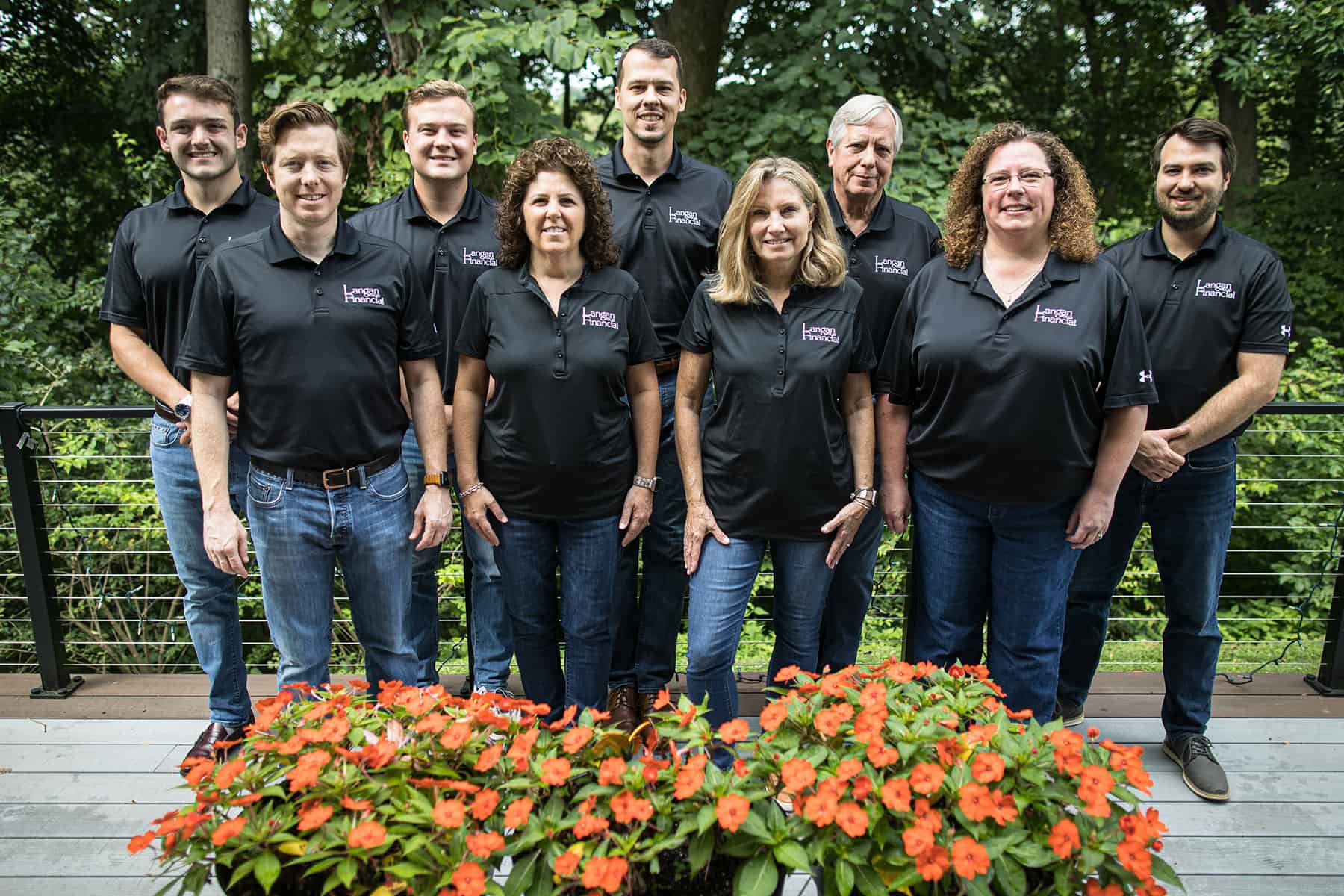
Our team of 11 financial experts, each with unique specialties, enhances our ability to focus on delivering value to our clients.
Disclosure
The content is developed from sources believed to be providing accurate information. The information in this material is not intended as tax or legal advice.
Please consult legal or tax professionals for specific information regarding your individual situation.
The opinions expressed and material provided are for general information, and should not be considered a solicitation for the purchase or sale of any security.
Securities offered through Cambridge Investment Research, Inc., a Broker/Dealer, Member FINRA/SIPC.
Investment Advisor Representative, Cambridge Investment Research Advisors, Inc. a Registered Investment Advisor. Cambridge and Langan Financial Group, LLC are not affiliated.
Cambridge does not offer tax or legal advice.