
LONG TERM CARE
Medicare generally does not pay for ongoing help with daily living, so here is how families think through the options and the trade-offs.
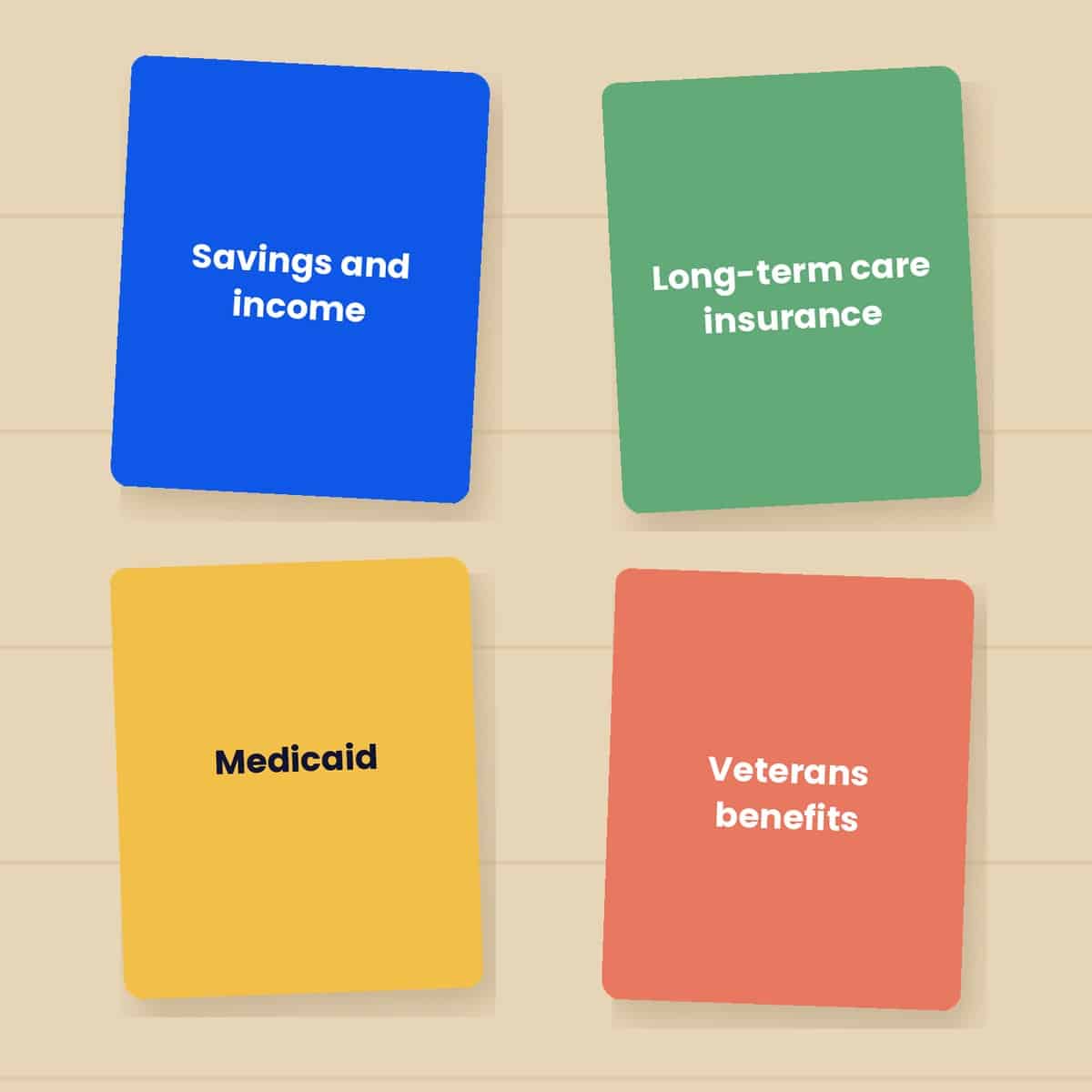
Families can plan for long-term care costs in several general ways. They can pay from savings and income, buy long-term care insurance or a hybrid policy, or use Medicaid if eligibility rules are met, and veterans can check va.gov for benefits and eligibility. Each approach has trade-offs, and this article does not recommend a product.

Key Takeaways
✓ Medicare does not pay for long-term care.
✓ The general ways to plan are savings and income, insurance, Medicaid and veterans benefits.
✓ Each approach has trade-offs, and eligibility and policy terms vary.
✓ Free Medicare counseling is available in Pennsylvania through PA MEDI (formerly APPRISE).
How do families plan for the cost of long-term care?
Long-term care, which Medicare also calls custodial care, includes medical and non-medical care for people who have a chronic illness or disability. Much of it helps with activities of daily living, such as dressing, bathing and using the bathroom.
Our sibling article, Does Medicare Pay for Long-Term Care? What It Covers and What It Does Not, covers what Medicare does and does not pay. This article picks up from there.
If you want a place to write things down as you read, the Long-Term Care Planning Checklist is free.
If this has been sitting on your list, now is a reasonable time to look. No approach is right for everyone. This is education, not a recommendation.
What types of care might someone need?
Care comes in several settings. Medicare.gov lists four:
- Home
- Community
- Assisted living
- Nursing home
Care needs can change over time. A setting that fits this year may not fit in a few years.
Hypothetical Example
Hypothetical example: Tom and Amy are a married couple. Tom starts with help at home a few days a week. Over time, his needs grow, and the couple considers a facility. The household then has to decide which resources pay for each stage.
This example shows how needs could shift. It does not predict what Tom, Amy or anyone else may need.
Can savings and income cover care costs?
Paying from savings and income means the household covers care from its own resources. That can rely on a withdrawal plan, which is a set approach for deciding which accounts to draw from and when.
Withdrawals can have tax effects. Ask your tax professional.
The trade-offs are plain. Care costs are uncertain, and spending on care competes with other goals. A larger need for care may also affect the income available to a surviving spouse. Any portfolio can lose value, including a diversified one.
A useful question to ask is which account would pay for care, and how those withdrawals would be taxed.
How do long-term care insurance and hybrid policies generally work?
Long-term care insurance is a policy that pays benefits after its benefit trigger is met and its elimination period, a waiting period, passes. A hybrid policy combines life insurance or an annuity with long-term care coverage. An annuity is a contract that makes regular payments under the terms of the contract.
Four terms to know:
- Benefit trigger. The condition a policy requires before benefits begin.
- Elimination period. The waiting period before benefits begin.
- Premium. The amount paid to keep the policy in force.
- Benefit limits. Policies set limits, such as how long benefits last.
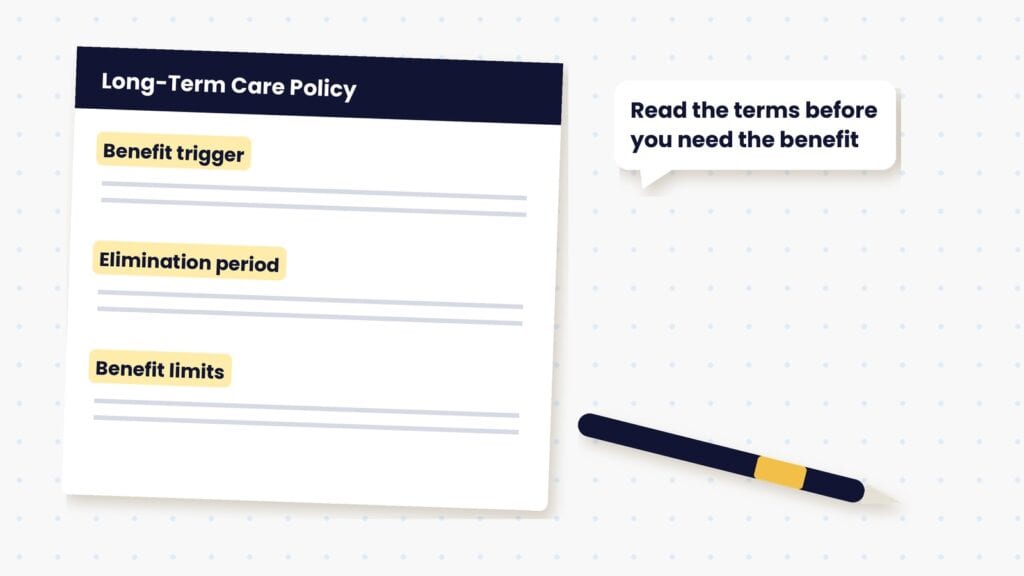
The trade-offs depend on the policy. Insurers can request premium increases for a whole class of policies, with state approval. A policy may pay little or nothing if care is not needed. Policy terms vary, so read them closely.
What do Medicaid and VA benefits generally do for care costs?
You may be eligible for long-term care through Medicaid if you meet your state’s eligibility requirements. Eligibility rules vary by state. An elder law attorney can explain how those rules apply to your situation.
Veterans can check va.gov for long-term care benefits and eligibility.
Pennsylvania residents can also reach PA MEDI (formerly APPRISE), the Pennsylvania Department of Aging’s free, confidential Medicare counseling program, at 1-800-783-7067, Monday through Friday, 8 AM to 5 PM.
Your move: four steps to start
01
List the care.
Write down the care you would want to avoid paying for out of pocket.
02
Gather documents.
Collect your coverage documents in one place.
03
Note open questions.
Write down which questions are still open.
04
Ask for help.
Bring them to a free counselor, an adviser or an elder law attorney, and use the checklist above to organize them.
How can we talk with family about care wishes and costs?
A plan for care costs can work better when the people involved know what it says. The conversation can feel awkward, and it is reasonable to start small.
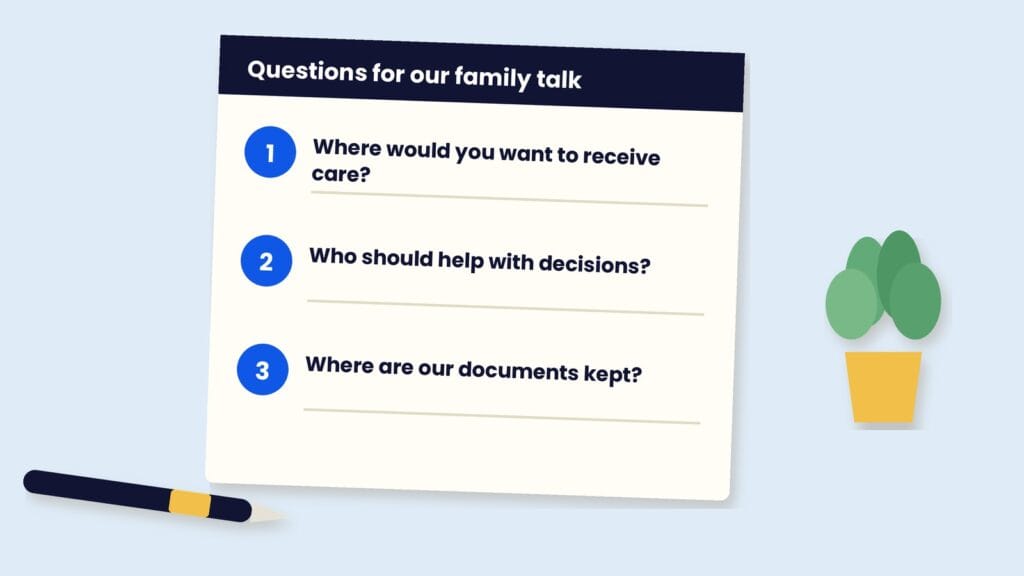
One way to begin is with wishes rather than money. Where would you want to receive care if you needed it? Who would you want involved in decisions? Answers to those questions give the dollar questions some context. If you have adult children, this guide on how to talk to adult children about money offers ways to open the subject.
Next, think about who needs to know where things are kept. A spouse, a child or a trusted friend may be asked to help at a hard moment, and they can help more easily if they can find the paperwork. This list of important financial documents is a place to start when you gather the papers worth keeping together.
You do not need to settle everything in one sitting. A first conversation can simply be about what each person would want to know.
When you meet with an adviser, an elder law attorney or a free counselor, you may find it useful to bring three questions:
- Which account would pay? Ask which account would cover care costs and how withdrawals from it would be taxed.
- What does a policy cover? Ask what any policy you hold or are considering covers, including care settings, how long benefits last and the length of the waiting period.
- Who handles decisions? Ask who would make financial and care decisions if you could not, and whether your documents name that person.
Common Questions
When could someone start planning for care costs?
Any time is a reasonable time to begin, and no timing suits everyone.
Does long-term care insurance cover care at home?
Policy terms vary, so read the benefit description to see which care settings a policy covers.
What is a hybrid policy?
A hybrid policy combines life insurance or an annuity with long-term care coverage.
Does Medicaid pay for assisted living?
Eligibility rules vary by state, so the answer depends on where you live and your situation. An elder law attorney can explain what applies in Pennsylvania.
Who can I talk to for free?
In Pennsylvania, PA MEDI (formerly APPRISE) offers free, confidential Medicare counseling through the Department of Aging. You can call 1-800-783-7067, Monday through Friday, 8 AM to 5 PM. If you would like to talk through how this fits your own plan, our team is here to help.
Sources
- Medicare.gov, Long-term care
- Administration for Community Living, Receiving Long-Term Care Insurance Benefits
- Congressional Research Service, Long-Term Care Insurance: Overview
- Pennsylvania Department of Aging, Medicare Counseling (PA MEDI, formerly APPRISE)
This article is provided for informational and educational purposes only and does not constitute investment advice, financial planning advice, tax advice, legal advice, or insurance advice. Langan Financial Group does not sell Medicare plans and is not connected with or endorsed by the federal government or the Medicare program. All investing involves risk, including potential loss of principal. Past performance is not a guarantee of future results. Individual results will vary based on specific financial circumstances. Medicare rules, premiums, deductibles, plan terms, and enrollment dates are set by law and by each plan, and can change. Figures shown are those published for the years named. Please consult a qualified financial, tax, or legal professional, and medicare.gov or 1-800-MEDICARE for coverage questions, before making decisions. Securities offered through PKS Securities, Inc., a Broker-Dealer, Member FINRA/SIPC. Advisory services offered through Langan Financial Group, LLC, a Registered Investment Adviser. Registration does not imply a certain level of skill or training. Hypothetical examples are for illustration only and do not represent any specific investment or client. The firm does not present hypothetical performance, so examples never include projected returns.
Guarantees associated with an annuity are subject to the claims-paying ability of the issuing insurance company. Langan Financial Group does not prepare or file tax returns. Tax consequences should be reviewed with your tax professional. Tax rules and figures are current as of the date of publication and can change.
Alex Langan is a licensed attorney. Langan Financial Group is not a law firm. Neither he nor the firm provides legal advice or practices law for the firm or its clients, and no attorney-client relationship is created.
STILL HAVE QUESTIONS?
See How These Decisions Fit Together in Your Own Plan
A twenty-minute conversation can help you understand your options.
Or call 717-288-1880