
RETIREMENT
By Alex Langan, JD, Chief Investment Officer
Langan Financial Group · 7 min read
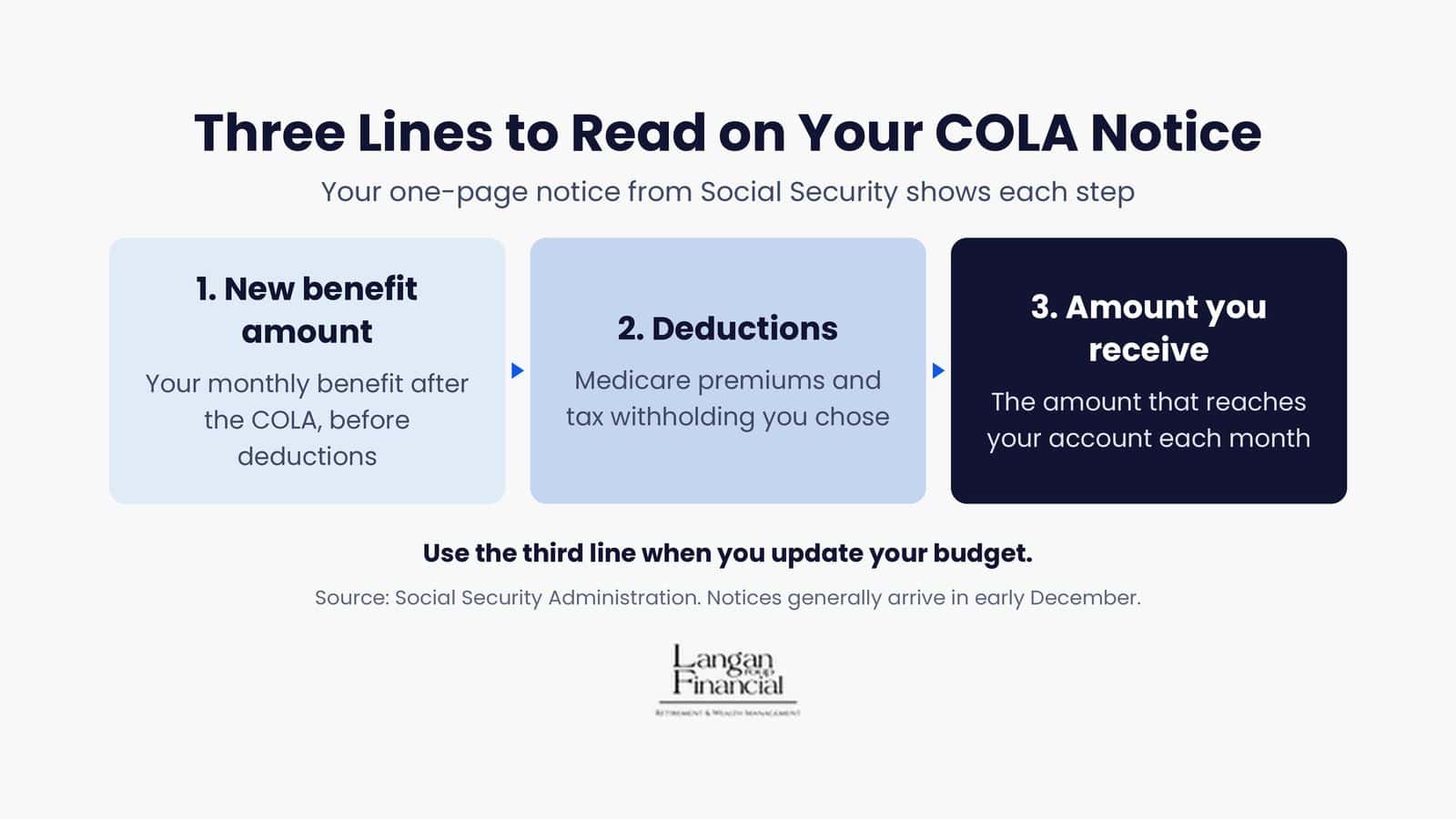
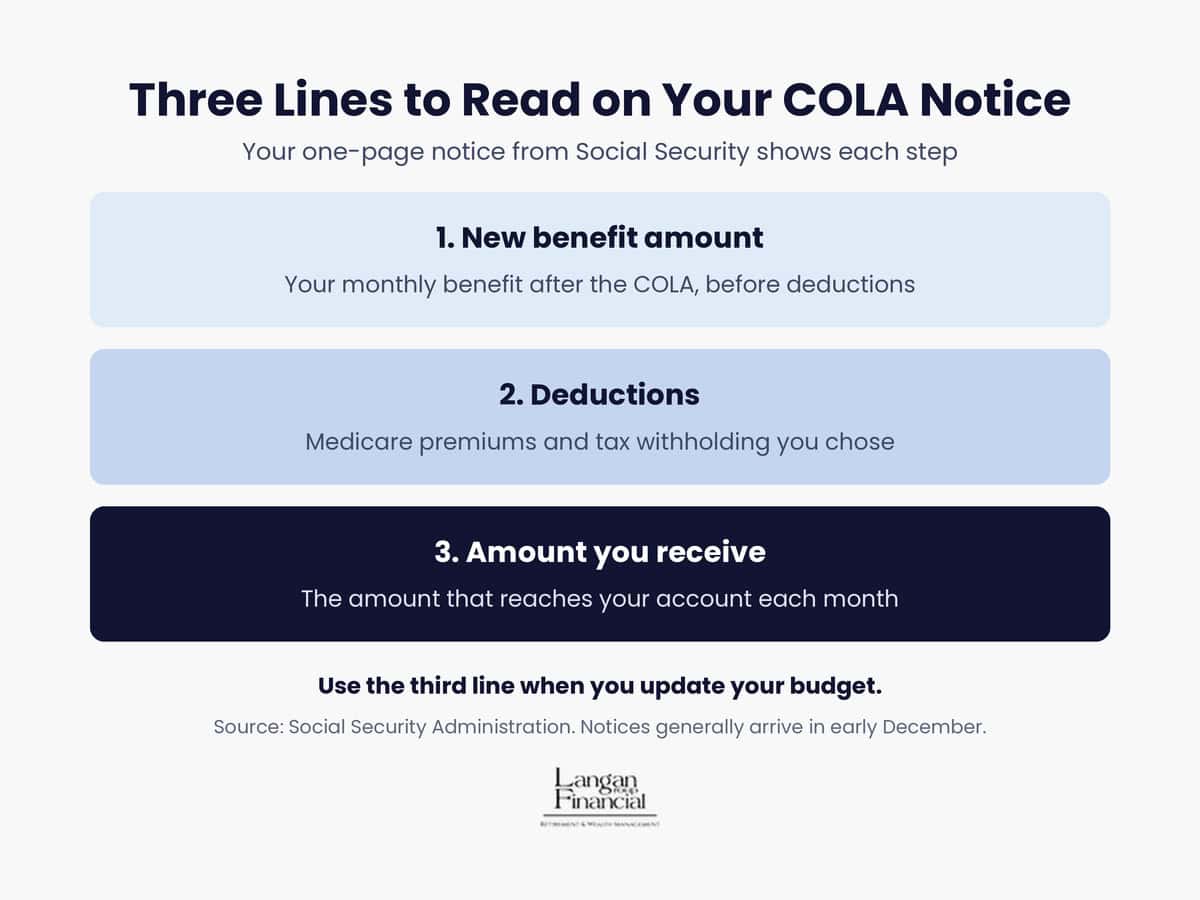
Your Social Security COLA notice shows three things: your new benefit, each deduction, and the amount you receive. The third amount is the one that reaches your account. The amount you receive can rise by less than the COLA, because Medicare premiums and tax withholding you chose come out first.
For 2027, Social Security benefits rise 3.6%. The 3.6% figure applies to your benefit before deductions. This article explains how the COLA is set and how to read each line of the notice. The article also covers why your deposit can differ from the headline, and what to do once your notice arrives.
Social Security also ties into your Medicare costs and taxes, which we cover in how Social Security and Medicare connect to your taxes. For the other rules that changed this year, see retirement rule changes in 2026.
Already receiving benefits: the notice is the clearest guide to your January deposit, and the sections below explain each line.
Not yet claiming: the same notice arrives each December once you start benefits, so knowing how to read it now can make that first year easier.
What Is the Social Security COLA?
A cost-of-living adjustment, or COLA, is the yearly increase that helps Social Security benefits keep pace with prices. Without it, a fixed benefit would buy less each year as prices rise.
The COLA was 2.8% for 2026. For 2027, the COLA is 3.6%. Each year’s figure depends on how much prices rose, so the COLA can be larger or smaller from one year to the next.
How Does Social Security Set the COLA?
Social Security compares average prices for July, August, and September with the same three months of the last year a COLA took effect. The price measure is the CPI-W, a consumer price index for urban wage earners and clerical workers. The increase is rounded to the nearest tenth of a percent.
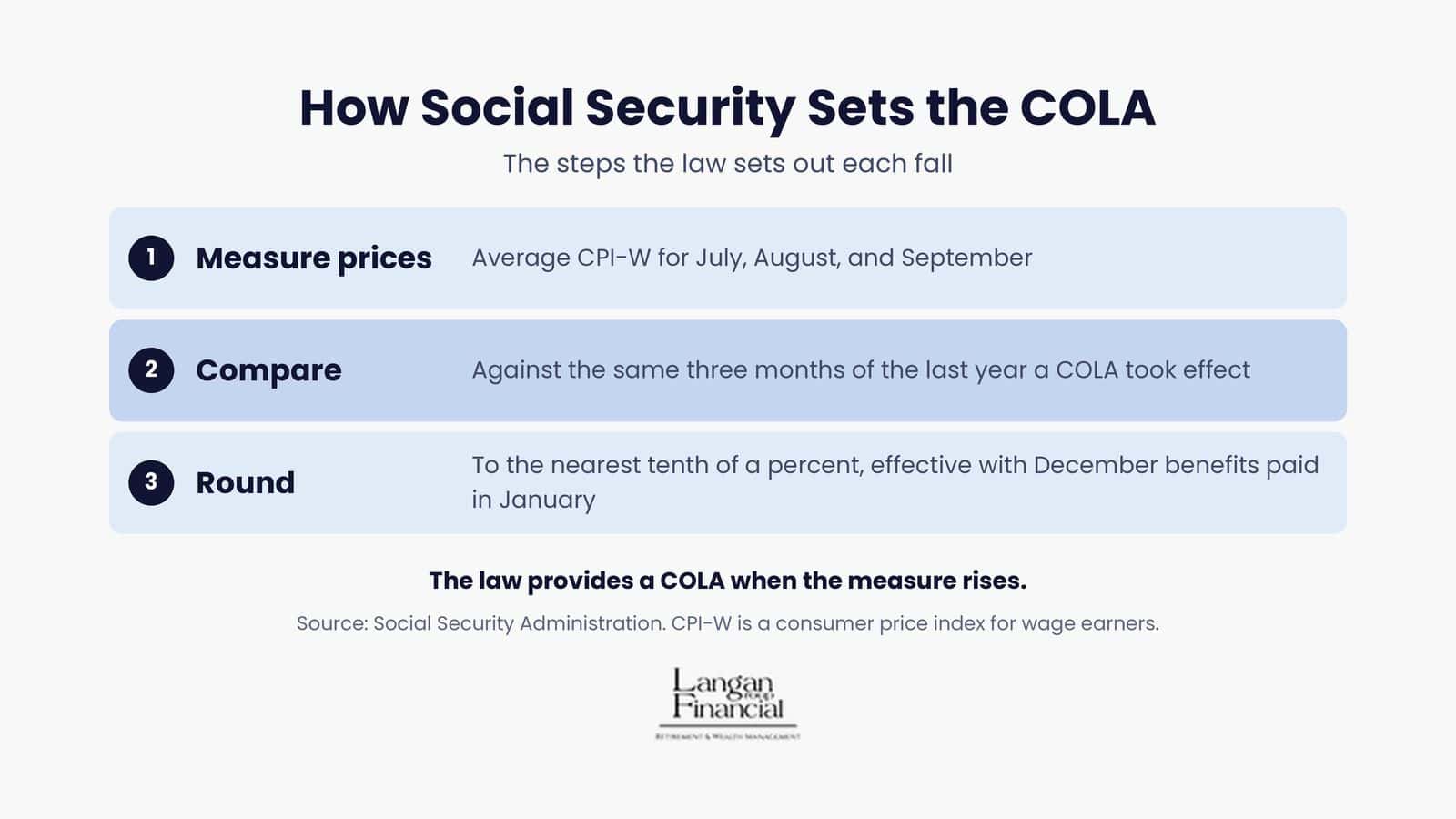
The COLA takes effect with December benefits, which are paid in January. The law provides a COLA when the price measure rises. Because the formula is set by law, Social Security announces the figure each October, after the September price data comes out.
What Does the Social Security COLA Notice Show?
Social Security sends a one-page notice that lists exact dates and dollar amounts for your new benefit and each deduction. Read the notice in this order:
- New benefit amount. Your monthly benefit after the COLA, before anything is taken out. This amount already includes the 3.6% increase.
- Deductions. Medicare premiums are generally taken out of the payment for people with Part B, along with federal tax withholding you chose. Some people also have premiums deducted for a Part D drug plan or a Medicare Advantage plan, which is a private alternative to Original Medicare.
- Amount you receive. The monthly amount that reaches your account after deductions. Compare this line with your current deposit to see your raise in dollars.
Keep the notice with your tax papers. Social Security sends a separate tax form, Form SSA-1099, generally in January. Form SSA-1099 shows the total benefits paid for the year.
Why Can Your Deposit Rise Less Than the COLA?
The COLA raises your benefit before deductions. Several things can take part of that raise before it reaches your account:
- The Part B premium. Medicare sets a new standard Part B premium each year. If the premium rises, part of your COLA goes to the higher premium.
- The Medicare income surcharge. Higher-income households can pay more for Part B and Part D. Medicare generally uses your income from two years earlier to set this surcharge.
- Drug plan or Medicare Advantage premiums. If you have these premiums taken out of your benefit, a premium increase lowers the amount you receive.
- Tax withholding. If you asked Social Security to withhold federal tax, a higher benefit can mean more withholding.
We explain how Medicare looks back at income in what to review during Medicare open enrollment.
How Does the Hold Harmless Rule Help Your Check?
The Social Security Act includes a rule often called the hold harmless rule. The rule keeps many people from getting a smaller check when the Part B premium rises. Under the rule, a Part B premium increase generally does not lower the dollar amount of your Social Security payment compared with the prior year. If your COLA is too small to cover the premium increase, your Part B premium rises by less. Your payment then stays the same.
The rule generally applies if you receive Social Security benefits for November and December and have the Part B premium deducted from your payment. Some people are not covered by the rule:
- People who pay the Medicare income surcharge. Higher-income households are not covered by the rule.
- New Medicare enrollees. The rule does not apply in the year you first enroll in Part B.
- People whose premium is not deducted from Social Security. Some people pay Part B another way, or have the premium paid by Medicaid.
- Part D premiums. The rule covers the Part B premium, not drug plan premiums.
When Does the Notice Arrive, and Where Can You Find It?
Social Security posts notices in the Message Center of my Social Security, its online account, and mails notices to others, generally starting in early December. People with Medicare can generally see their new amount online starting in late November, once the new Medicare premiums are set.
If you prefer to read the notice online, my Social Security lets you choose to stop paper notices. The online version shows the same lines as the mailed notice.
What If Something on Your Notice Looks Off?
Start by comparing the new notice with last year’s notice or your latest deposit. Look at the deductions line first. A new drug plan or Medicare Advantage plan chosen during open enrollment can change the premium deducted from your benefit.
For questions about your benefit amount or tax withholding, you can contact Social Security at 1-800-772-1213 or through my Social Security. For questions about a drug plan or Medicare Advantage premium, the plan itself is the place to start.
What Should You Do With the Amount You Receive?
- Compare the amount you receive with your current deposit. The difference is your raise in dollars.
- Update your budget. Prices for the things you buy can rise faster or slower than the COLA. Our article on whether your lifetime income covers essential costs shows how to compare the two.
- Review your withholding. If you have federal tax withheld from your benefit, a higher benefit can change how much you need to withhold. You can choose to have 7%, 10%, 12%, or 22% of each payment withheld. To start or change withholding, contact Social Security or use IRS Form W-4V, the federal form for voluntary withholding.
- Check how your benefits are taxed. A higher benefit can raise the share of Social Security that counts as taxable income. We look at how each kind of income is treated in how Social Security, pensions, and savings differ.
Common Questions
What is the Social Security COLA?
The cost-of-living adjustment is the yearly increase that helps Social Security benefits keep pace with prices. The COLA is based on the change in the CPI-W from one third quarter to the next.
What is the COLA for 2027?
Social Security benefits rise 3.6% for 2027, starting with December 2026 benefits paid in January 2027.
When does the COLA show up in my payment?
The COLA takes effect with December benefits, which are paid in January.
Why did my payment rise less than the COLA?
The COLA applies before deductions. If your Medicare Part B premium or other deductions rise, the amount you receive can rise by less than the COLA.
Can a higher Medicare premium lower my Social Security check?
For many people, no. The hold harmless rule generally keeps a Part B premium increase from lowering the dollar amount of the payment. The rule does not cover higher-income households, new enrollees, or Part D premiums.
Do I need to do anything to get the COLA?
Social Security applies the COLA to eligible benefits, and the new amount appears on your notice. You can review the notice and contact Social Security if something looks off.
Where can I find my COLA notice?
Account holders can view the notice in the Message Center of my Social Security. Others receive the notice by mail, generally starting in early December. Get The Confident Retirement Brief each Wednesday. Subscribe to the newsletter. If you would like to talk through how this fits your own plan, our team is here to help. Schedule a consultation.
Sources
- Social Security Administration, Latest Cost-of-Living Adjustment
- Social Security Administration, Social Security Announces 2.8 Percent Benefit Increase for 2026
- Social Security Administration, How the Hold Harmless Provision Protects Your Benefits
- Social Security Administration, Request to Withhold Taxes
This article is provided for informational and educational purposes only and does not constitute investment advice, financial planning advice, tax advice, legal advice, or insurance advice. Langan Financial Group does not sell Medicare plans and is not connected with or endorsed by the federal government or the Medicare program. All investing involves risk, including potential loss of principal. Past performance is not a guarantee of future results. Individual results will vary based on specific financial circumstances. Medicare rules, premiums, deductibles, plan terms, and enrollment dates are set by law and by each plan, and can change. Figures shown are those published for the years named. Please consult a qualified financial, tax, or legal professional, and medicare.gov or 1-800-MEDICARE for coverage questions, before making decisions. Securities offered through PKS Securities, Inc., a Broker-Dealer, Member FINRA/SIPC. Advisory services offered through Langan Financial Group, LLC, a Registered Investment Adviser. Registration does not imply a certain level of skill or training. Langan Financial Group does not prepare or file tax returns. Tax consequences should be reviewed with your tax professional. Tax rules and figures are current as of the date of publication and can change.
Alex Langan is a licensed attorney. Langan Financial Group is not a law firm. Neither he nor the firm provides legal advice or practices law for the firm or its clients, and no attorney-client relationship is created.
STILL HAVE QUESTIONS?
See How These Decisions Fit Together in Your Own Plan
A twenty-minute conversation can help you understand your options.
Or call 717-288-1880