
Open enrollment tends to get five minutes and a click. Open enrollment before you retire deserves more than that.
The reason is simple. Some of what you choose follows you out the door, and some of it stops the day you leave. Knowing which is which is easier to sort out in the fall than in the week you retire.
If you are already on Medicare, the fall window works differently and is covered in Medicare open enrollment.
Four Choices Worth a Closer Look
Most benefit menus are long. Four items carry the most weight for someone within a few years of retiring.
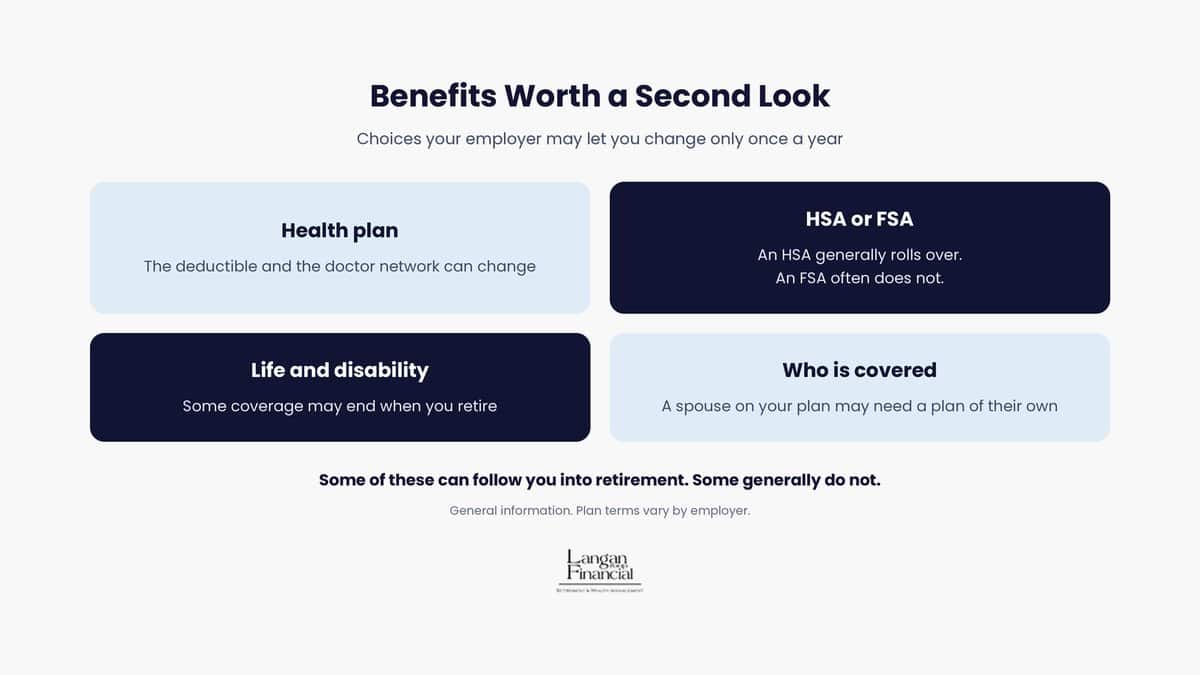
- The health plan itself. The deductible, which is what you pay before the plan starts covering costs, can change from one year to the next. So can the network, meaning the doctors and hospitals the plan covers, and the amount taken from each paycheck. The plan that fit five years ago may not be the one that fits now.
- An HSA or an FSA. A health savings account generally rolls over and stays yours. A flexible spending account often does not, though some plans allow a limited carryover or a grace period.
- Life and disability coverage. Some workplace coverage ends when you leave. If you are counting on it, that is worth confirming rather than assuming.
- Who is covered. If a spouse is on your plan, your retirement changes their coverage as well as yours.
Each of these is a decision you can make once a year. Missing the window usually means waiting until the next one, unless you have a qualifying life event such as a marriage, a birth, or a change in employment.
The HSA Detail Worth Knowing
Health savings accounts get confused with flexible spending accounts, and the difference matters more as retirement gets closer.
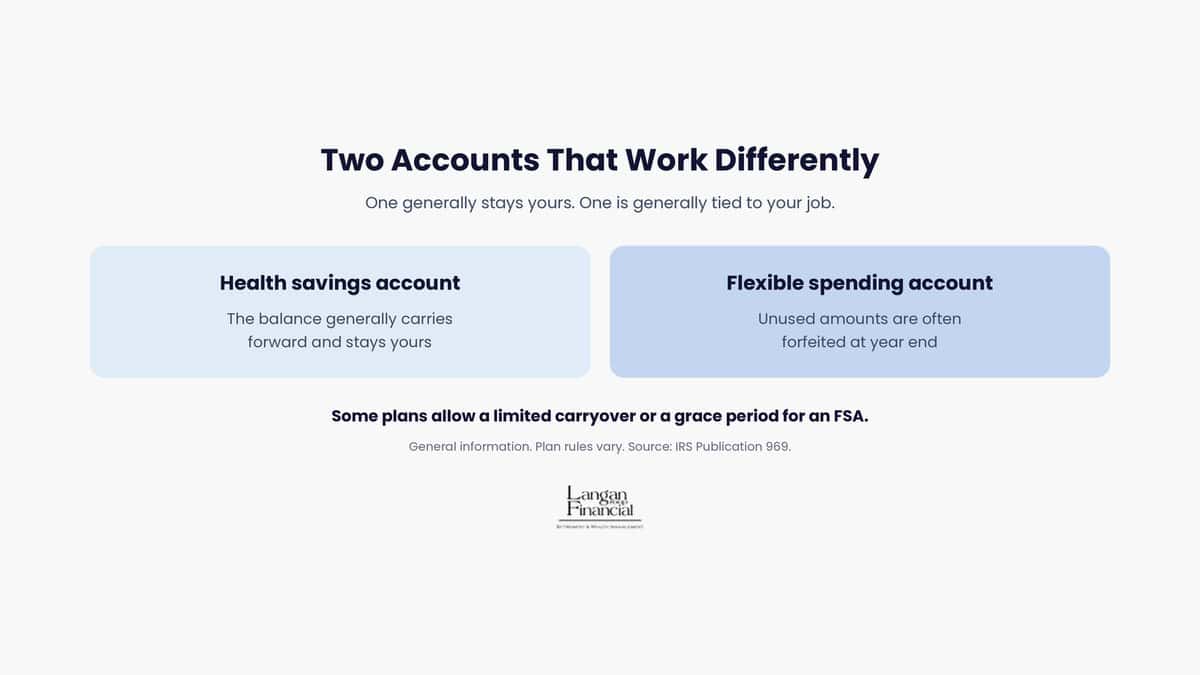
An HSA generally stays yours. The balance carries forward year to year, and you can keep using it for qualified medical costs after you stop working.
Contributions generally stop once you enroll in Medicare. That makes the timing of Medicare enrollment worth confirming, particularly if you plan to work past 65.
An FSA works differently. It is generally tied to your employment, and unused amounts are often forfeited at year end or at separation. Some plans allow a limited carryover or a grace period. Your plan document is the authority.
What Tends to End When You Leave
This is the part that tends to catch people off guard.
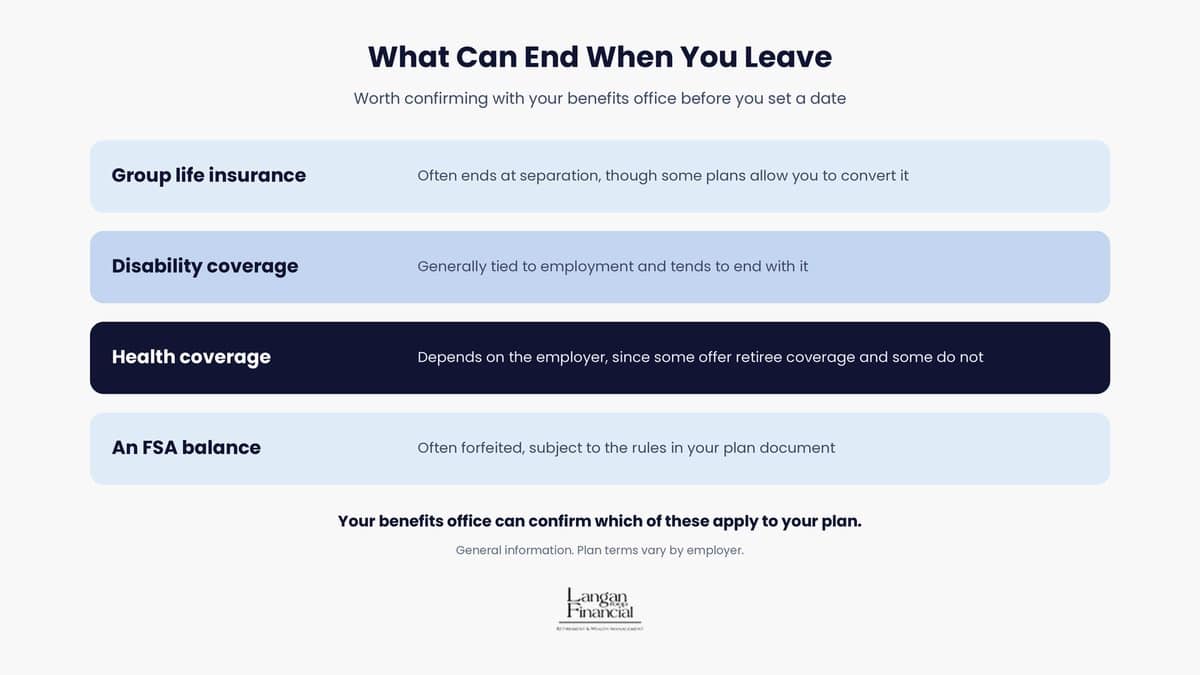
- Group life insurance often ends at separation, though some plans allow you to convert it to an individual policy within a set time.
- Disability coverage is generally tied to employment and tends to end with it.
- Health coverage depends on the employer. Some offer retiree coverage and some do not.
- An FSA balance is often forfeited, subject to the plan’s rules.
The benefits office can confirm each of these for your plan. Asking in October is easier than asking in the week you give notice, and the answers can affect the timing of your retirement date.
How This Connects to the Rest of the Plan
Benefit choices look like a paperwork task. They reach further than that.
Health costs are usually one of the larger essential expenses in retirement, and essential expenses are what your lifetime income is measured against when you check for a retirement income gap.
If a spouse would need their own coverage, that is a cost worth knowing before you pick a retirement date, and it is part of asking whether the plan still works for one person.
Speak With an Advisor Today
We can look at how a benefit decision fits your income plan and your retirement timing, and point you to the right place for the coverage questions themselves.
Or call 717-288-1880
A Short Plan for This Fall
- Read what your employer sent, including the summary of what is changing.
- Write down your premium, deductible, and out-of-pocket maximum for this year and next.
- Confirm which policies continue if you leave, and which do not.
- If a spouse is on your plan, note what their coverage would cost on their own.
- If you are near 65, confirm how your plan works alongside Medicare.
Our free checklist, Your Annual Enrollment Review, covers both the Medicare side and the workplace side on one page.
We send a planning question like this one each Wednesday in our retirement newsletter.
Common Questions About Open Enrollment Before You Retire
What is open enrollment at work?
It is the period each year, usually in the fall, when you can change your health plan and other benefits for the year ahead. Outside that window, changes generally require a qualifying life event such as a marriage, a birth, or a change in employment.
What should I review during open enrollment before I retire?
The health plan itself, any health savings account or flexible spending account, life and disability coverage, and who else is covered on your plan. Each one can work differently once you leave the employer.
What happens to an FSA when I retire?
A flexible spending account is generally tied to your employment, and unused amounts are often forfeited, though some plans allow a limited carryover or a grace period. The rules come from your plan document, so it is worth checking yours.
What happens to an HSA when I retire?
A health savings account generally stays yours. You can keep using the balance for qualified medical costs. Contributions generally stop once you enroll in Medicare, so the timing of enrollment matters.
Does my employer coverage end when I retire?
It depends on the employer. Some offer retiree coverage and some do not, and life or disability policies often end at separation. The benefits office can tell you which policies continue.
How does this connect to Medicare?
If you are approaching 65 or retiring, workplace coverage and Medicare interact. Signing up late for Medicare can carry a lasting penalty in some situations, so the sequence is worth confirming before you set a retirement date.
Sources
Centers for Medicare and Medicaid Services, Joining a Plan and Open Enrollment
Centers for Medicare and Medicaid Services, Medicare Costs, updated each year
Internal Revenue Service, Publication 969, Health Savings Accounts and Other Tax-Favored Health Plans
This article is provided for informational and educational purposes only and does not constitute investment advice, financial planning advice, tax advice, legal advice, or insurance advice. Langan Financial Group does not sell Medicare plans and is not connected with or endorsed by the federal government or the Medicare program. All investing involves risk, including potential loss of principal. Past performance is not a guarantee of future results. Individual results will vary based on specific financial circumstances. Medicare rules, premiums, deductibles, plan terms, and enrollment dates are set by law and by each plan, and can change. Figures shown are those published for the years named. Please consult a qualified financial, tax, or legal professional, and medicare.gov or 1-800-MEDICARE for coverage questions, before making decisions. Securities offered through PKS Securities, Inc., a Broker-Dealer, Member FINRA/SIPC. Advisory services offered through Langan Financial Group, LLC, a Registered Investment Adviser. Registration does not imply a certain level of skill or training.